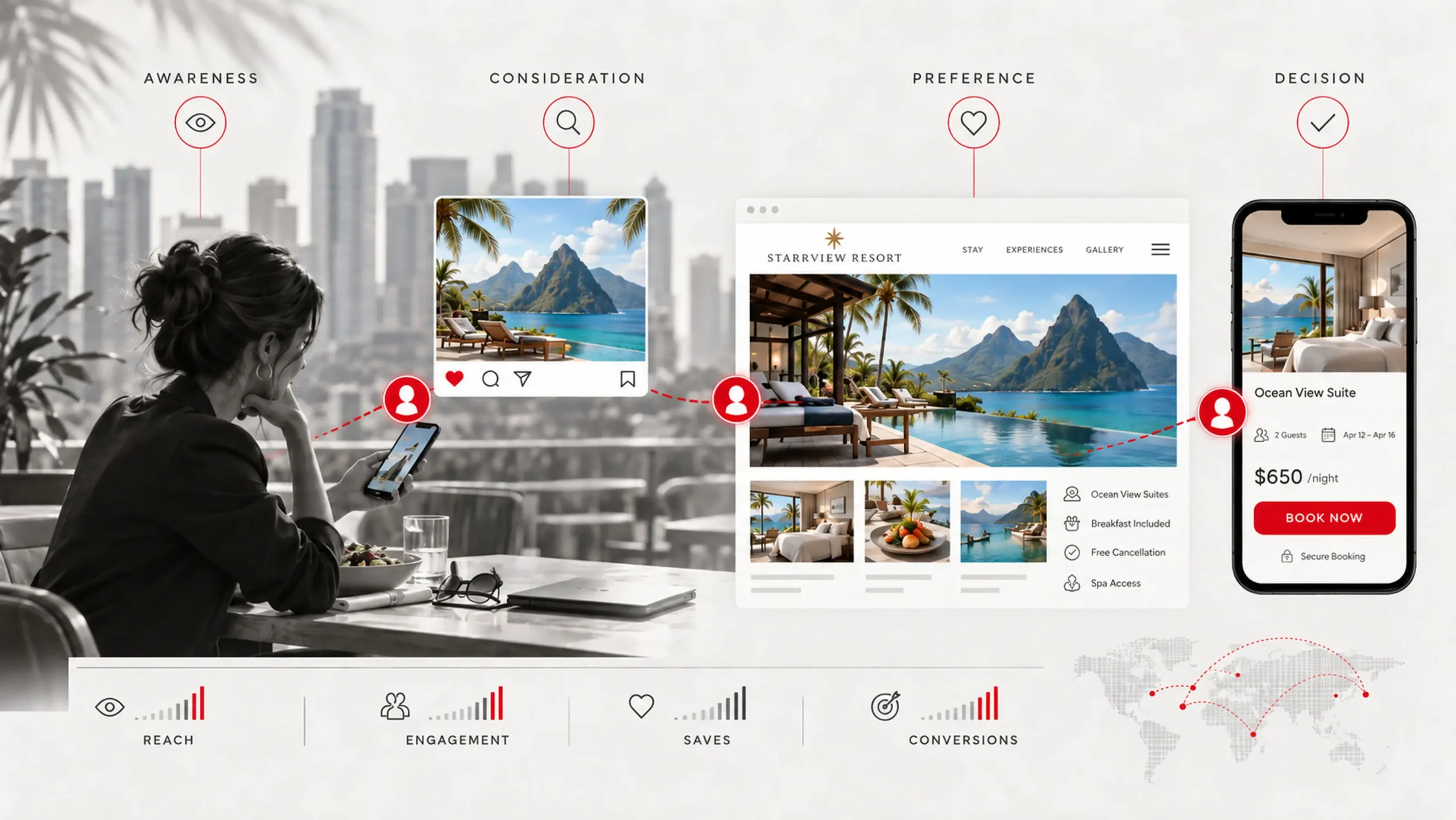
Travel brands tend to post on social because they feel like they should. The content calendar exists. The cadence is there. Whether the activity is generating genuine interest or moving people closer to a booking decision is a question that often goes without a clear answer, and the gap between posting regularly and posting with purpose is wider than it tends to look from the outside.
In our experience, that gap tends to come down to whether the content was built around a specific audience or simply produced to fill the schedule. Those are meaningfully different briefs, and the results reflect it across social media marketing for travel brands.
Posting Consistently Is Not the Same as Posting Well
Volume does not fix the underlying problem. A property producing five posts a week of reused imagery and caption copy written to sound professional is building a feed, but not necessarily an audience. Travelers follow properties for a reason, and that reason is usually curiosity about what the experience actually feels like.
What tends to stop someone mid-scroll is something specific to the property, a piece of real photography or a genuine moment from the guest experience that clearly did not come from a shoot brief. Content like that gives the place a personality distinct from every other resort running a similar feed. When it shows up, people respond because it reads like something worth sharing, not because an algorithm rewarded it.
What Travel Audiences Actually Respond To
The consideration window for a Caribbean trip is long. Travelers spend weeks, sometimes months, passively researching before they look at room rates, following properties on Instagram, watching what the food looks like, and reading comments from past guests. Social content earns its keep during this phase, while people are still quietly deciding.
The content that tends to do the most work in that window is specific to the property in a way that polished brand content often is not. It might be the view from one particular corner of the pool deck rather than a wide establishing shot, or the dish the chef has run every Friday for years, or the front desk staff member who remembers returning guests by name. Details like those signal authenticity in a way that category-level marketing rarely manages.
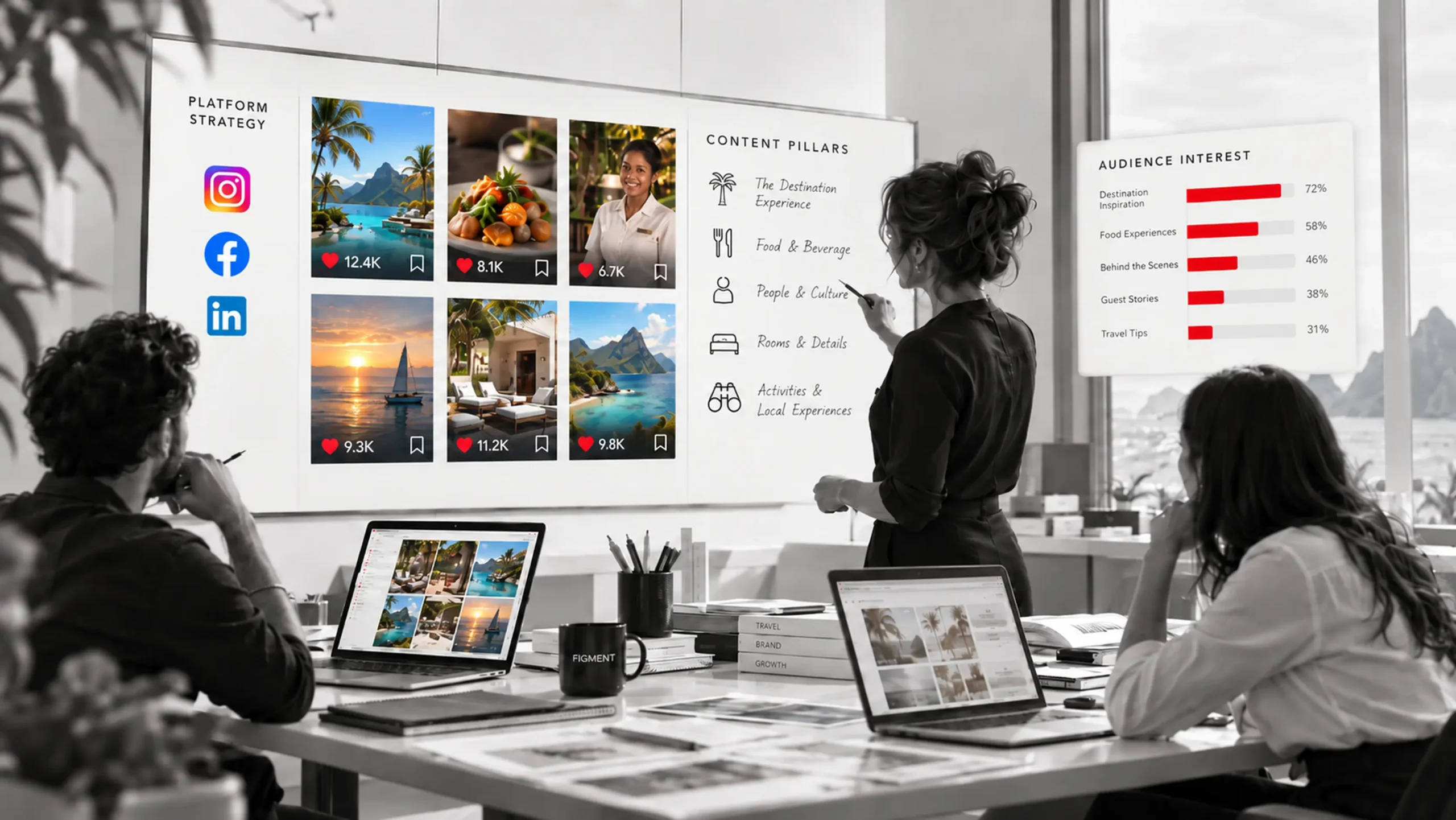
Social’s Role in the Full Consideration Cycle
Social media rarely closes a booking on its own, and it was never really designed to. What it does well is keep a property present and credible while a traveler is still weighing options, which in Caribbean travel can be a months-long window. Pair that presence with a strong website and search visibility, and social becomes the channel that builds preference before the traveler is ready to act.
That is a different brief than simply maintaining a posting schedule. Social plays a specific role in how a traveler moves from awareness to a decision, and a content strategy tends to perform better when it is built around that role rather than around volume alone.
Building a Presence That Holds Attention Over Time
A social presence that holds attention over time starts with a clear point of view on what the property genuinely is, and the creative discipline to express that consistently across formats and platforms. Properties that have developed that clarity tend to produce content with more focus, and audiences respond to focus in ways they do not always respond to frequency.
Our approach to social media marketing for travel brands is built around what a property genuinely is, not what the category suggests it should sound like. To talk through what a more focused social strategy could look like for your brand, book a strategy session with our team.