A travel brand’s website usually does one of two things when someone lands on it for the first time. It earns the next couple of minutes of their attention, or it loses them to a competitor who’s one tab over. In hospitality, where research happens fast and decisions get made emotionally, a weak first impression rarely gets a second chance.
Most travel brands invest money in the physical property but treat their website as something to deal with at another time. Some resorts spend years refining its guest experience and will sometimes have a site that doesn’t come close to reflecting it. That’s where trust starts to break down, before the conversation even starts.
Speed and Structure are Trust Signals
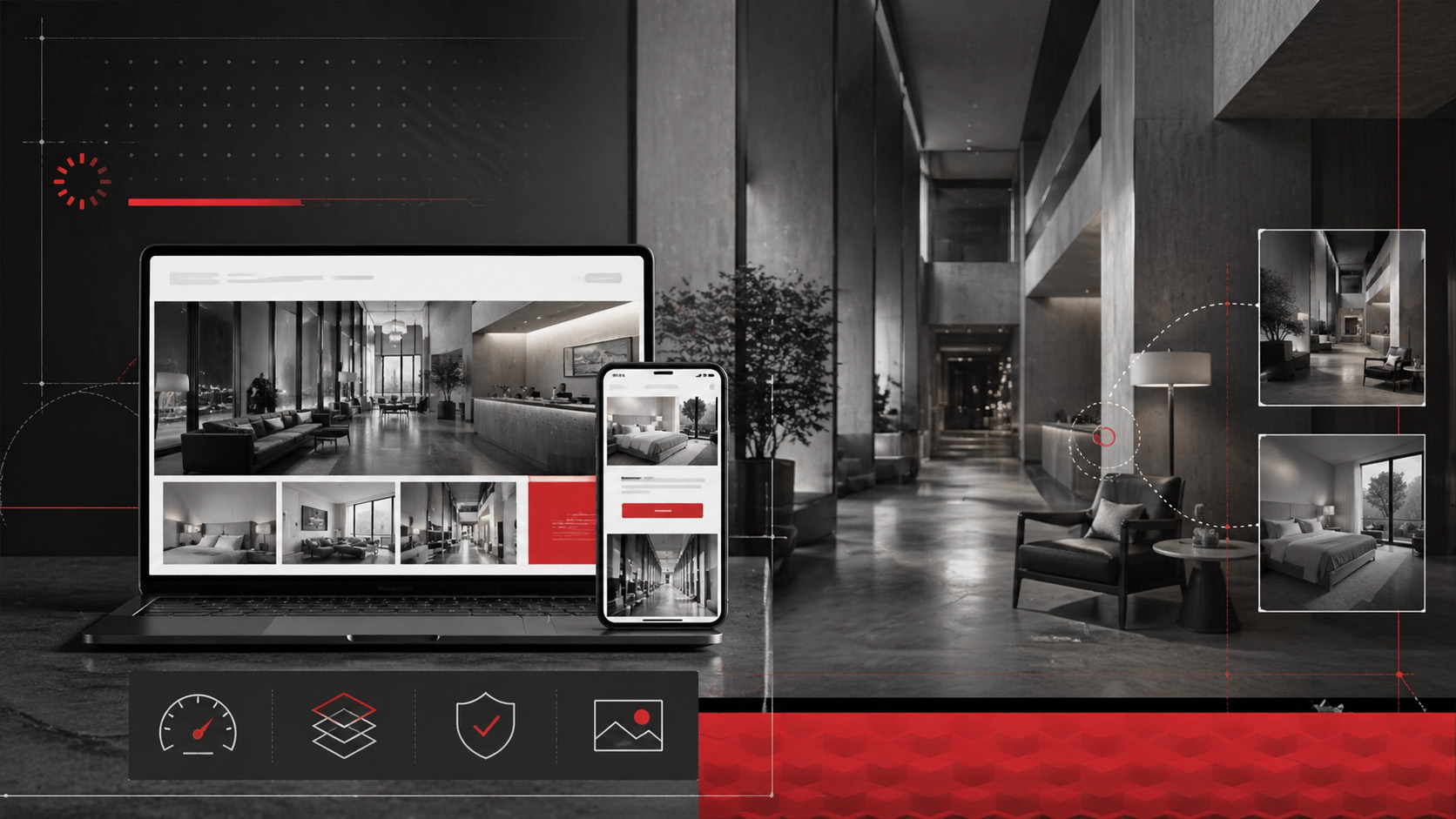
The first thing a website communicates about a brand is actually not the headline. It’s whether the page loads correctly or fast enough. A site that takes more than a few seconds to load on a browser or a phone usually reads as neglected. In hospitality that’s a credibility issue, not just a UX inconvenience. Travelers are evaluating the property before they’ve read a single word or saw their first image.
Website navigation matters in the same way. A property that buries its room categories more than three clicks deep or whose booking flow breaks, communicates something about how the operation runs. Guests read design as a proxy for the guest experience. If the site feels difficult to move through, the assumption is the stay will feel the same.
Photography That Tells the Story
Stock photography is easy to spot. Travelers who research properties regularly have seen the same four or five image types across hundreds of sites, and when they hit a page and recognize library shots, they start questioning what the real property looks like. That doubt is hard to recover from.
Authentic photography from the property can be a big upfront investment, but worth every bit of it. It’s the one thing stock imagery can’t replicate. Real rooms, real food, the actual view from the terrace, and those images that answer the questions a prospective guest is quietly asking before they decide. Generic imagery leaves those questions open and can cause doubt.
Copy That Sounds Like the Property, Not a Brochure
The language on most travel websites has been written to sound impressive rather than honest. “Luxurious accommodations.” “Curated experiences.” “Unparalleled service.” These phrases exist on so many property sites that they’ve almost lost any meaning. They don’t tell a guest what makes this property different, and they don’t give reasons to prefer it.
Clear, specific copy does the work that category language can’t. Describing the particular character of a property, builds more trust than stacking up superlatives. Guests notice specificity. It signals that someone who actually knows the property wrote the content.
When the Site and the Property Don’t Match
The trust problem compounds when a guest books based on the website and arrives to find the property doesn’t match what was shown. That disconnect is expensive in refund requests, in reviews, and in the long-term cost of a reputation that’s hard to rebuild.
Good web design for travel brands starts with one question: does this site reflect what the property actually delivers? For a lot of brands, the honest answer is no. The design looks fine. The strategy behind it is missing. Our web solutions for travel brands are built to close that gap, with structure, speed, real imagery, and copy that earns the trust the property has already worked to build. If your current site isn’t doing that job, reach out and let’s take a look at it together.