
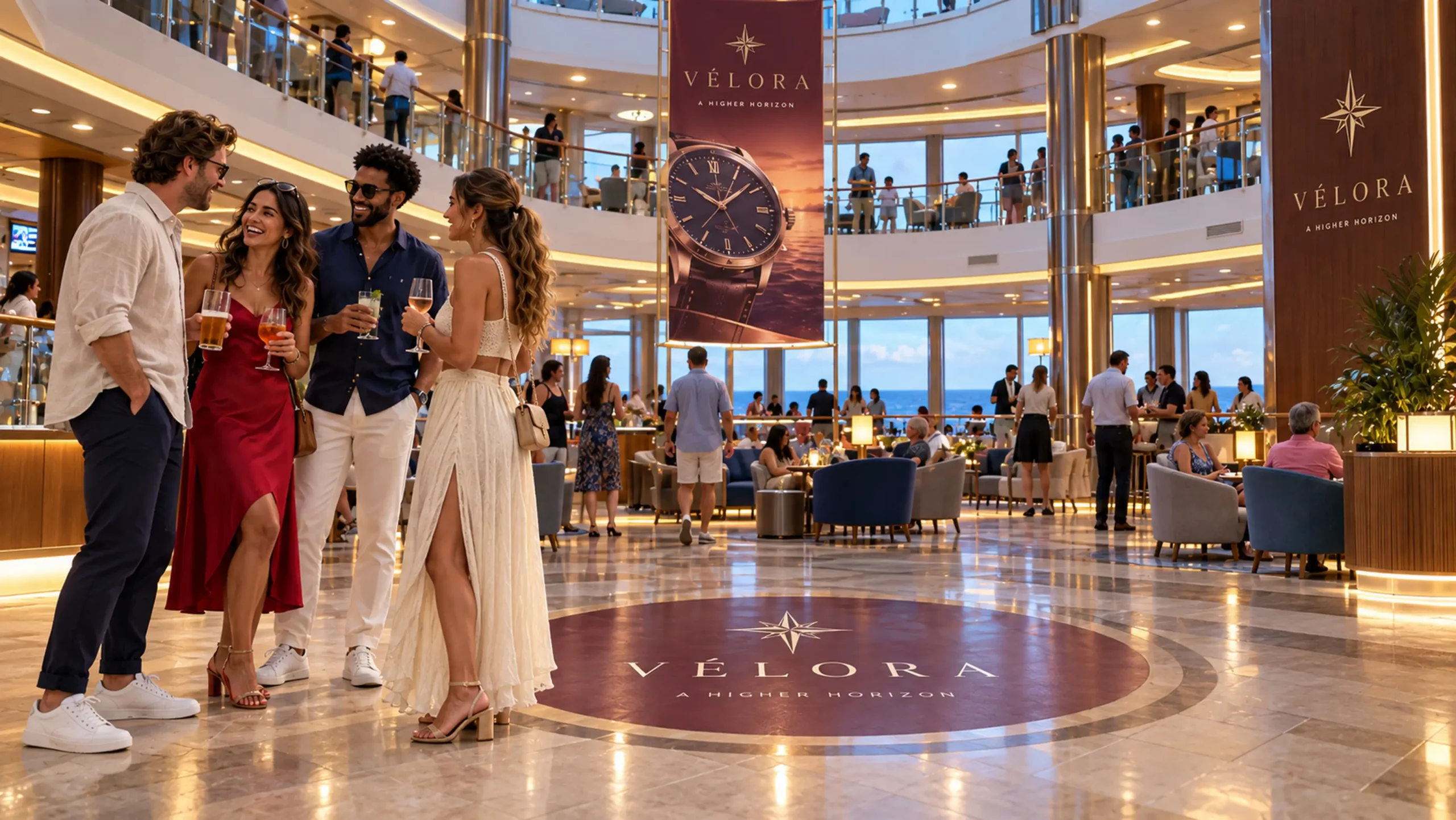
A charter cruise is one of the most controlled brand environments in travel. The ship, the itinerary, and nearly every moment guests spend onboard all reflect the brand. That level of control can be a real advantage, or it can work against the experience, depending on how well the marketing and execution side has been thought through before the ship leaves port.
Most charter operators understand the product they are selling. They understand the itinerary, the entertainment, the guest mix. The piece that tends to get less attention is how much the physical branding onboard influences what guests actually remember about the event when they get home. Marketing budgets go into pre-event promotion, and the onboard environment often gets whatever is left.
The Ship Is the Brand Expression
When guests board a chartered ship, the brand experience starts immediately. The signage at the gangway, the welcome materials in the cabin, and the items waiting at their seat all set an early impression. When those pieces do not match each other, or look disconnected from what was marketed in the months before the trip, guests pick up on it. Nobody files a complaint about brand inconsistency. They simply come away with a slightly cooler impression of the experience than the event itself may have deserved.
Good branded cruise marketing treats the ship’s physical environment as a design problem worth solving properly. The printed materials, the signage, and the branded giveaways should each look like they were made for this specific program. When the pieces feel cohesive, guests notice it, even if they could not explain why. When they do not, the event can read as something assembled quickly regardless of how much planning actually went into it.
Why Execution Deserves as Much Attention as Creative
The creative direction can be strong and still fall apart at the execution stage. A site inspection done weeks in advance, before materials are finalized, leads to installation decisions that do not account for the actual space. Printed pieces arrive in the wrong quantity. Promo items clear customs three days after the ship left port. Anyone who has run a charter cruise program has a version of at least one of those stories.
The operational reality of a charter cruise is that there is very little margin for adjustment once the ship is moving. Unlike a hotel event where something can be corrected overnight, a branded cruise environment is largely set at departure. What is there is what guests experience for the duration of the trip, which makes the planning phase considerably more consequential than it sometimes gets treated in pre-event conversations.
Content Captured Onboard Has a Long Life After the Ship Docks
Charter cruises generate content with real marketing value beyond the event itself. The guest-facing moments and brand activations that happen at sea can be captured and used across social media, email campaigns, and digital marketing long after the trip is over. That does not happen on its own. It requires having a content strategy in place before departure, rather than working with whatever footage happens to exist afterward.
The brands that handle this well treat onboard content as part of the broader travel marketing strategy, not as something to think about after the ship docks. The assets produced during a charter cruise can support social media for months and feed into paid media targeting past attendees or prospective guests for future sailings. A well-executed branded cruise tends to produce more usable marketing material than the program anticipated, when someone has planned for it.
When the Creative and Operational Sides Work Together
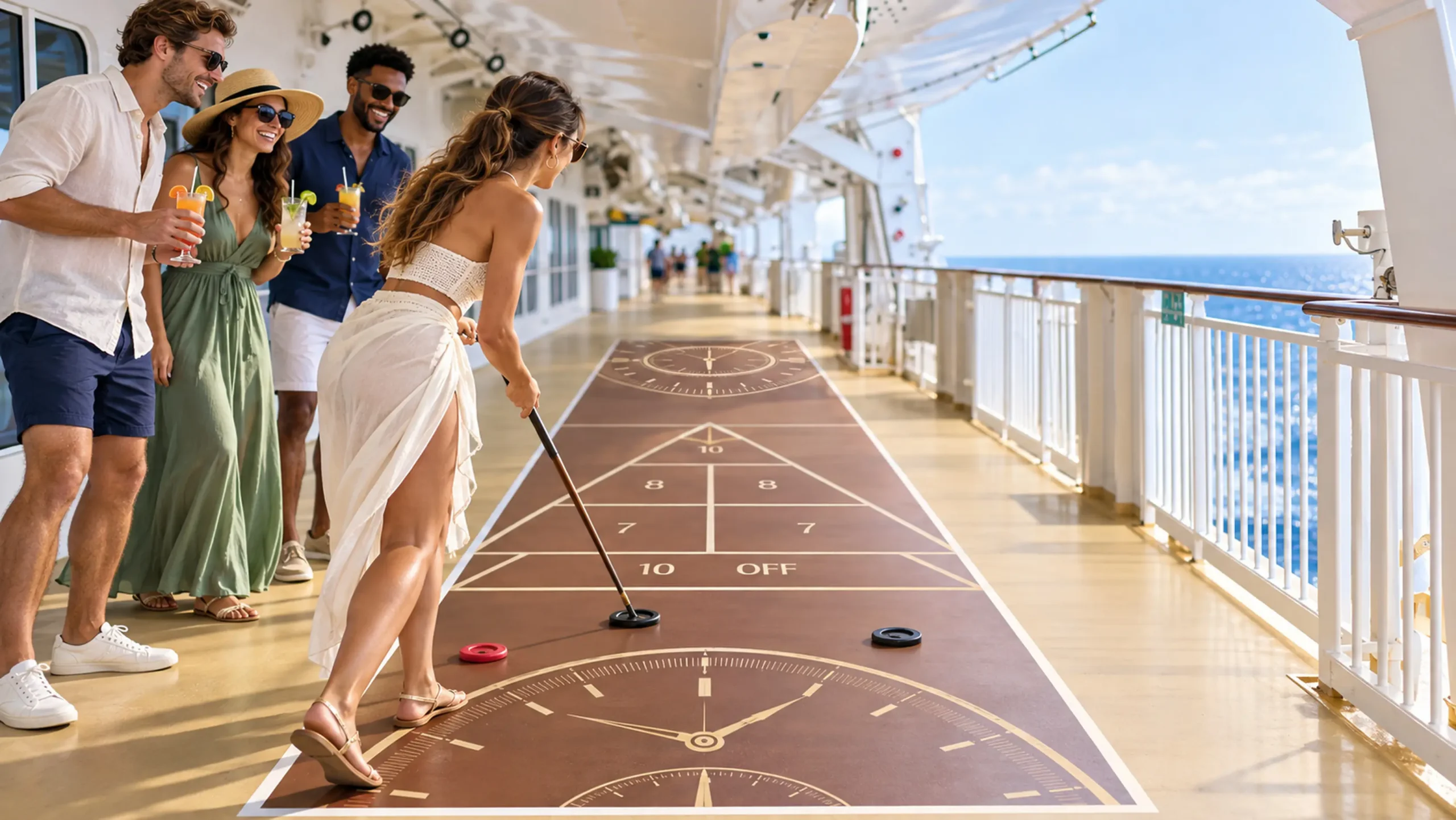
Charter cruise programs tend to come together more smoothly when the creative team and the production team are working from the same brief, or are the same people. When design decisions get made without input from the installation side, things can get built that do not fit the actual space. When logistics runs without the creative direction in hand, the materials that show up may be technically correct and still look wrong on the ship.
Our branded cruise marketing work covers site inspection, creative and design, print production, logistics, installation, and the content strategy that carries the program forward after the ship docks. We have run this across charter cruise programs at scale, and having those disciplines in one team tends to keep the onboard environment on track through the execution stage. If you are in early planning for a charter program, reach out to our team and we will take a look at where things stand.