

When we first published a set of travel marketing trends, the industry was reopening after years of disruption, and the biggest question was how to rebuild traveler confidence. That conversation has moved on. By 2026, a meaningful share of trip planning starts inside an AI assistant rather than a search engine, and the brands earning bookings tend to be the ones built to be found inside that new research process.
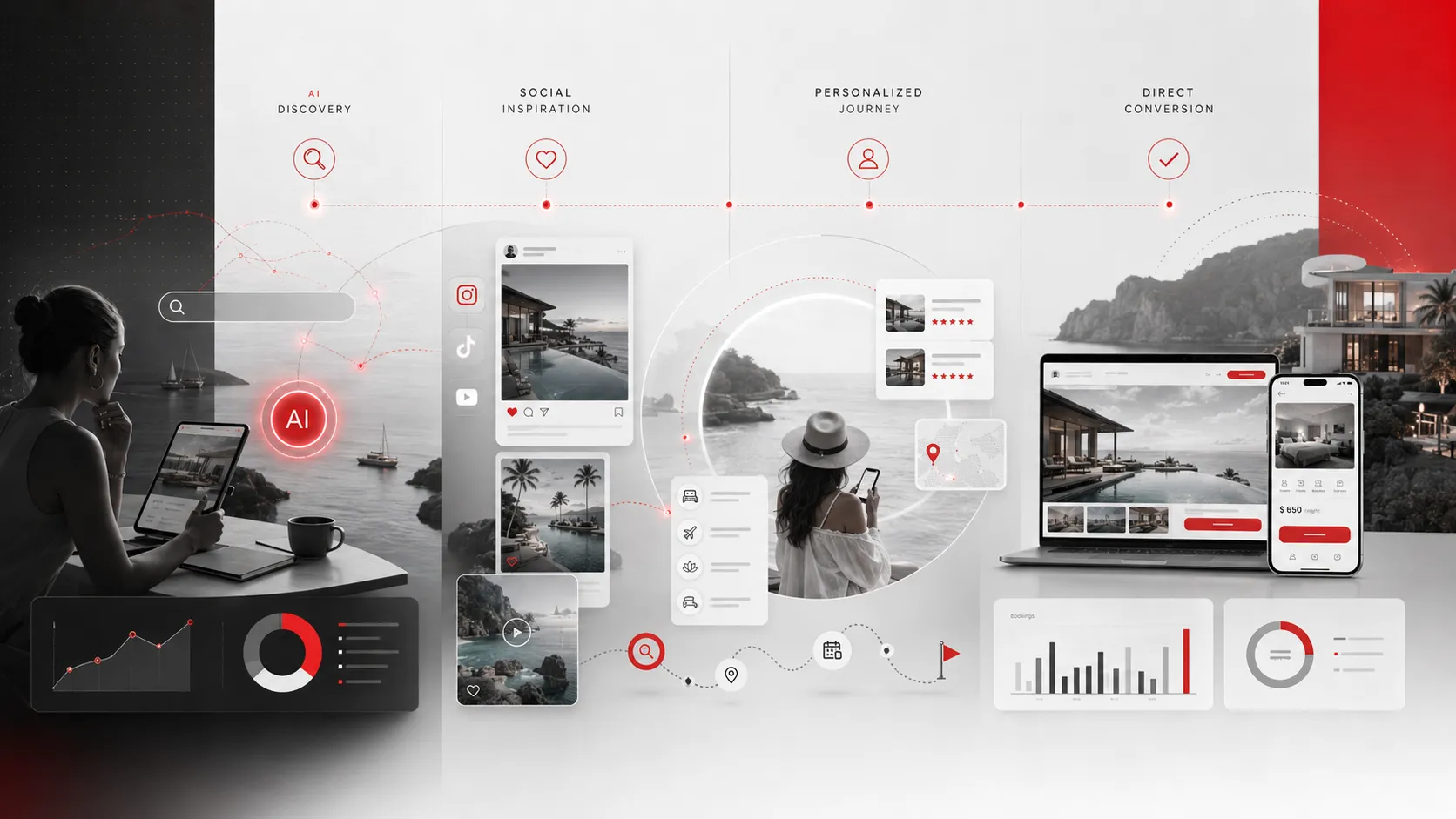
Several of the channels in our original list are still doing real work, but how travelers move through them has changed enough that the strategy underneath needed a refresh. The throughline for digital marketing for travel brands in 2026 is that AI has changed where travel research starts, without changing where trust actually gets built.
Travelers Now Start Their Research With AI
McKinsey’s analysis of generative AI in travel found that 84 percent of travelers who used an AI tool to help plan a trip said it improved their experience, and visitors who arrived at travel sites through a generative AI source bounced at a rate 45 percent lower than typical search traffic. People are not just experimenting with these tools. They are getting real value from them, and that value is starting to shape how seriously a travel brand needs to take its presence inside an AI-generated answer, not only a search results page.
The booking moment has not handed itself over to AI, though. A Skift survey conducted with Expedia found that only 8 percent of travelers trust AI to complete a booking on its own, with most preferring to finish that step on a site they already recognize. AI is becoming the front door of digital marketing for travel brands, while the booking itself still happens somewhere the traveler has chosen to trust. Content that is specific, with clear itinerary details and current pricing, tends to earn the citation inside an AI answer, and a fast, trustworthy website closes the loop once that traveler clicks through.
What Travelers Want Has Shifted Toward Meaning
Hilton’s annual traveler survey, reported by Hospitality Net, found that 86 percent of travelers say experiences matter more to them than material gifts, and 72 percent say they plan trips around a personal passion or skill. Two-thirds of millennials structure trips around interest-based events, whether that is a food festival, a wellness retreat, or a live music weekend.
That shift changes what actually earns attention for a travel brand’s content and the wider digital marketing strategy behind it. A generic destination guide tends to read as filler, while a specific account of what a stay or an excursion feels like tends to stay with a reader. Describing a particular moment is usually what a traveler remembers when they come back to book.
Discovery Has Moved to Social and Video
Short-form video and social platforms have become a starting point for travel research in a way they were not a few years ago, often well before a traveler ever searches a brand by name. That shift is turning social media into less of a pure awareness channel and more of a discovery engine in its own right.
A video or a post rarely closes the booking on its own, though. Once a traveler clicks through, the website still has to confirm what the content promised, with accurate details and a clear path to the next step. Discovery can start almost anywhere now, but the trust that leads to a booking still tends to get built on a brand’s own site.
Personalization Now Goes Beyond a First Name
Skift’s coverage of Global Hotel Alliance’s 2026 research found that nearly two-thirds of GHA members have used a tool like ChatGPT to help plan a trip, with that share rising to roughly four-fifths among Gen Z travelers, and a similar share say they would be comfortable using an AI-powered travel concierge.
Travelers who are this comfortable letting AI handle parts of their planning tend to expect more from a brand’s own emails and offers, not less. A newsletter that reflects what someone has actually shown interest in, rather than a generic monthly send, does the kind of work that builds the loyalty repeat travel depends on.
Bringing It Together
The travel brands adjusting well to all of this tend to treat AI search, social discovery, and personalization as pieces of one digital marketing strategy rather than separate boxes to check. If you are weighing how your own approach holds up against where travelers are actually starting their search in 2026, a strategy session is a useful next step to map out where the gaps are and what to prioritize first.